
This site uses cookies for analytics and to improve your experience. By clicking Accept, you consent to our use of cookies. Learn more in our privacy policy.
Lion’s Mane has become the mushroom everyone wants to grow, and honestly, I get it. It tastes incredible, it looks strange in the best way, and it hits that sweet spot where beginners feel confident… right until the mushroom decides it wants to do something else entirely.
If you’re growing Lion’s Mane for the first time, here’s the straightforward, honest version of what actually works indoors — without overcomplicating it.
Lion’s Mane and the rest of the Hericium species don’t behave like oysters, shiitake, or anything else you’ve probably grown.
Once you understand those quirks, they become very consistent producers.
This is one species where genetics matter more than people think.
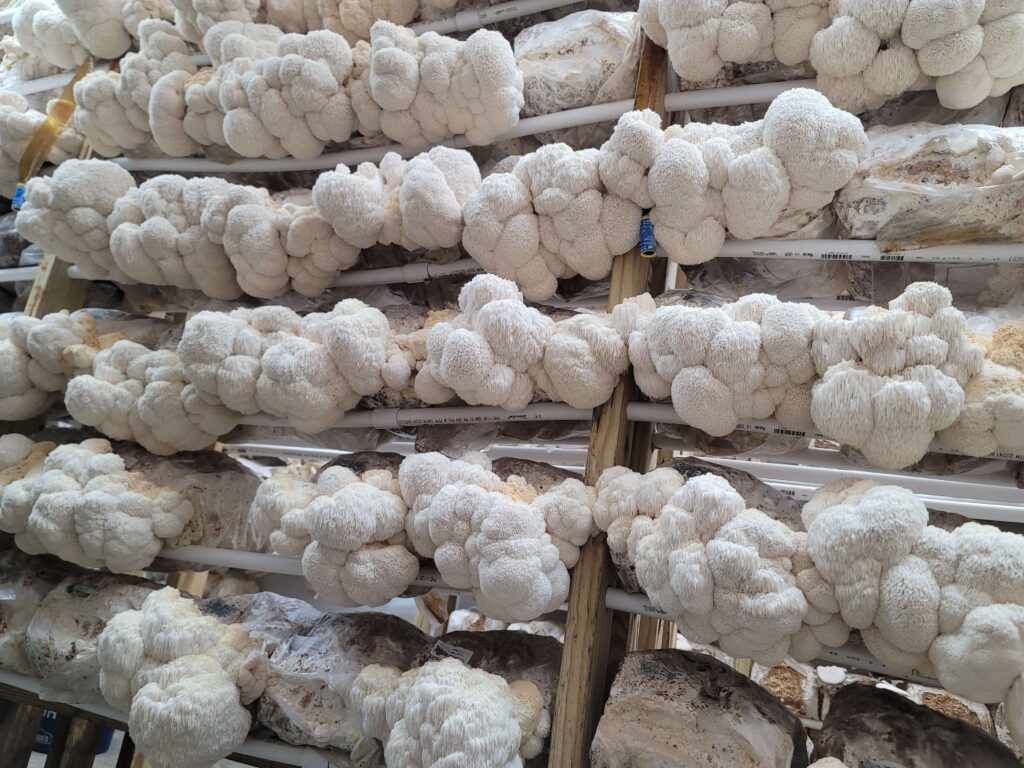
Good Lion’s Mane produces clean, dense, snowball-like fruit. Weak genetics turn into coral forests, stalled blobs, or half-formed poms that never finish.
Start with a reliable culture source — it saves you a lot of frustration.
Hericium performs best on:
Lion’s Mane feeds hard on the water inside the block and the water vapor in the room. A dry block guarantees a poor flush.
This is where new growers usually get tripped up.
Lion’s Mane pins long before a block ever looks colonized, so if you leave the bags sealed in incubation for too long, they’ll pin all over the place — then get confused when you move them.
Here’s the better way:
The block will still look like mostly sawdust at this point.
Ignore it. Hericium knows what it’s doing.
Opening early forces consistent pin placement and gives you predictable, photo-worthy clusters.
Here’s where most guides overdo it.
Instead of a constant 95%, run a wide humidity swing:
Let the room breathe between these extremes.
Lion’s Mane acts like a sponge — if you keep the room constantly soaked, the mushroom gets soggy, translucent, and slow. The humidity swing keeps it hydrated without drowning it, while the block itself provides the steady moisture the fruitbody actually feeds on.
Moderate.
If you blast it like an oyster, it’ll turn into coral.
60–70 °F, with nicer teeth at the lower end.
Full spectrum 6500K.
Mostly so your grow room looks clean and the mushrooms photograph well. Lion’s Mane doesn’t demand special lighting; it just benefits from a space you can see clearly.
Harvest right before the teeth get long and feathery.
You want:
Wait too long and the teeth get wispy, the mushroom yellows, and the texture goes downhill.
Coral-like antlers:
Too much air. Dial it back.
Stalling midway:
Your block dried out or your humidity swing is too low.
Brown/yellow patches:
Humidity swings too extreme or the mushroom sat too long.
No pins where you cut:
Bag wasn’t opened early enough in the first place.
Lion’s Mane rewards growers who don’t overthink things — steady moisture in the block, intelligent humidity swings, early bag opening, and moderate airflow. That’s it.
Over the next few posts on Spawning Culture, we’ll go deeper into Hericium genetics, the differences between species, and why some strains produce massive, clean poms while others try to look like modern art.
If this mushroom hooked you like it hooked so many of us… welcome.
#KeepSpawningCulture