

Spawning Culture — Mossy Creek Mushrooms
Log cultivation is often framed as slow, quaint, or strictly backyard-scale. That framing misses what logs really are: one of the most resilient, lowest-input mushroom systems you can build, whether you’re a homesteader, a preparedness-minded grower, or a sustainable market farmer.
When done well, log cultivation trades speed for stability, and labor for longevity. It doesn’t rely on sterile labs, complex infrastructure, or fragile supply chains. And when you lean into techniques long used in Japan—specifically deep X cuts and true wedge cuts with sawdust spawn—it becomes far more efficient than most people realize.
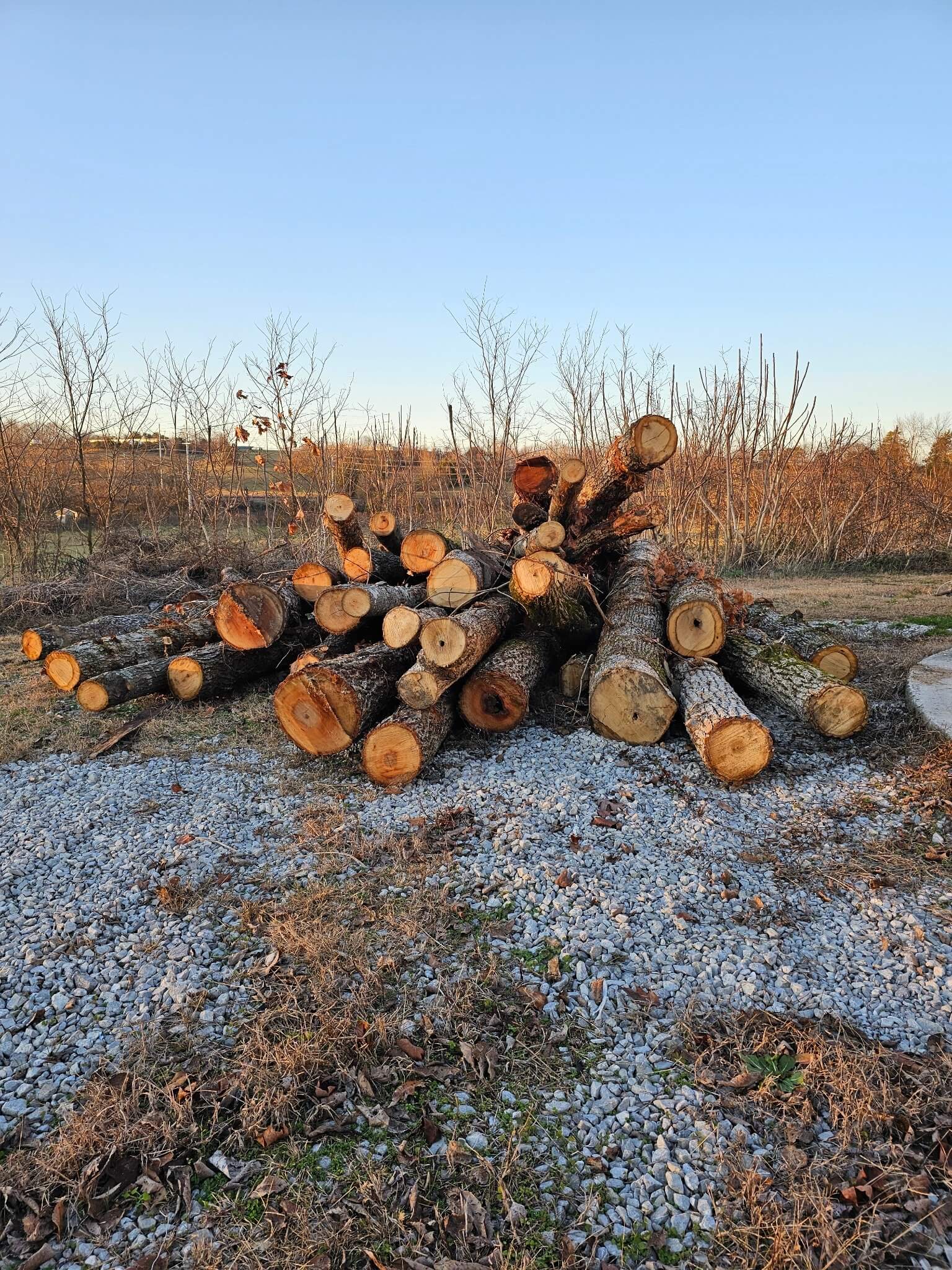
Log-grown mushrooms don’t give instant gratification. What they give instead is:
A properly inoculated log becomes a long-term biological asset—a way of storing future food and nutrition in wood.
For homesteads and survival-oriented systems, that kind of slow reliability matters. For sustainable market farmers, logs create a baseline production system that keeps working while faster, more fragile systems fluctuate.
In North America, log cultivation is usually taught using drilled holes and plug spawn—dozens of holes per log. It works, but it’s labor-heavy and slow.
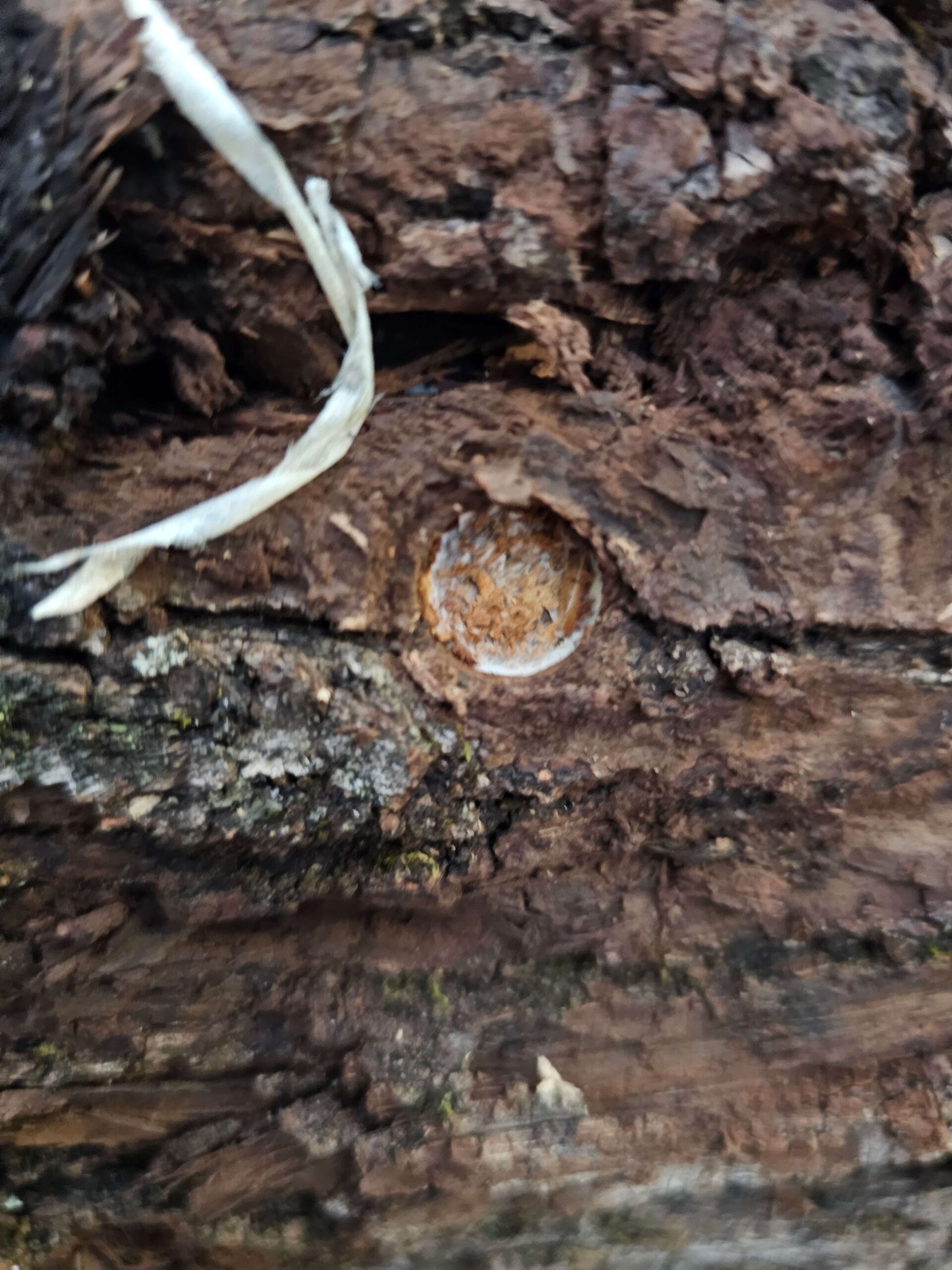
In Japan, large-scale log production evolved differently. Instead of many small inoculation points, the focus is on fewer, deeper cuts that place large amounts of spawn directly into the interior of the log.
Two techniques matter here:
Both dramatically reduce labor, speed up colonization, and make sawdust spawn the clear choice.
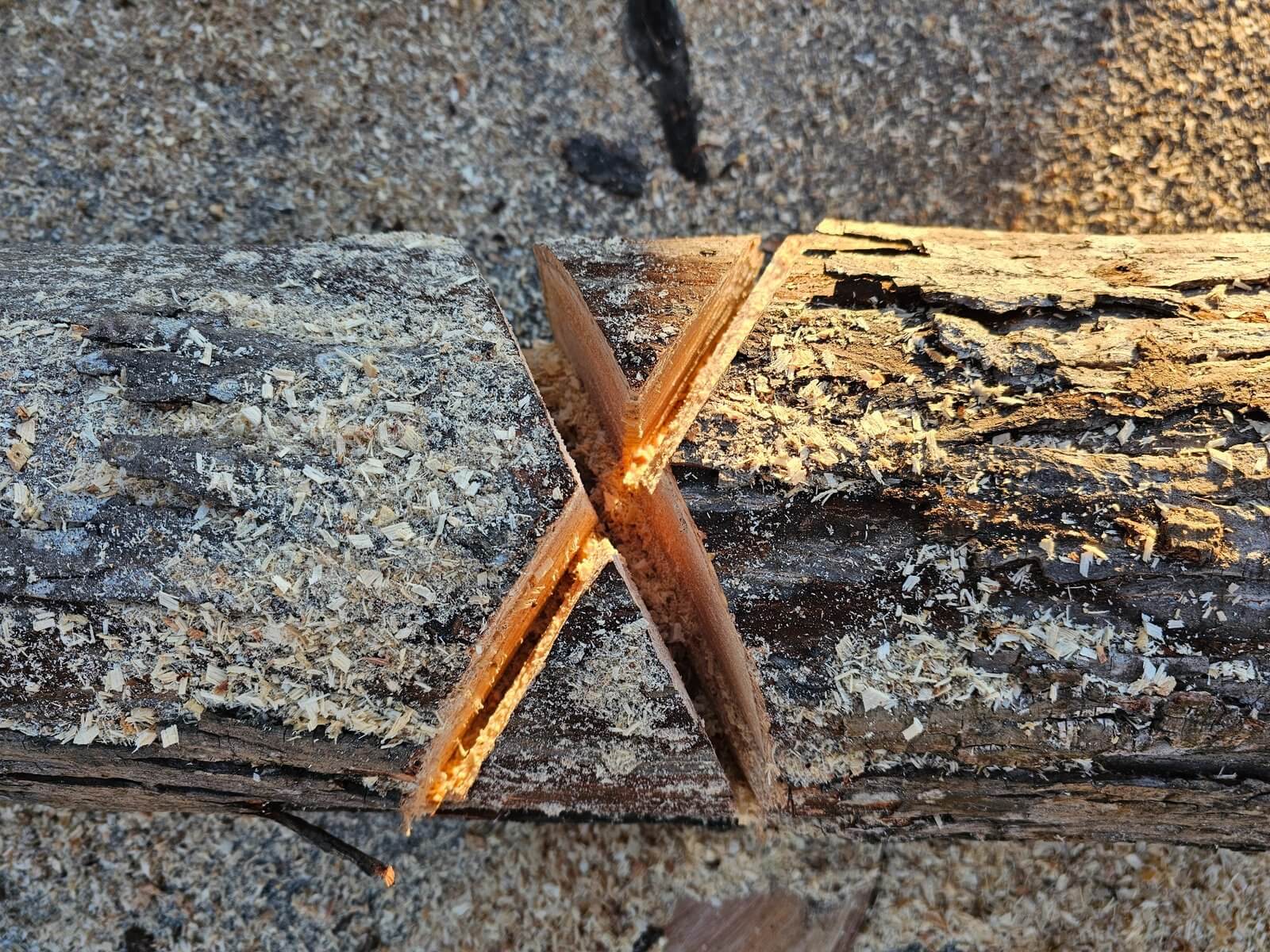
When making X cuts, we don’t just score the bark. We cut roughly halfway into the log.
That depth matters.
By placing spawn deep into the wood:
Instead of asking the fungus to slowly work inward from shallow surface holes, you start it where it naturally wants to be.
A few deep, intentional cuts routinely outperform dozens of shallow ones.
Wedge cuts take this concept even further.
Rather than a shallow kerf, we cut matching angled cuts on both sides, remove the wedge completely, and expose a clean pocket of fresh interior wood.
The process:
That replaced wedge acts like a natural plug:
This puts spawn as deep as possible, dramatically shortening spawn run times and leading to more even colonization.
You’re no longer asking mycelium to fight its way inward.
You’ve already put it where the work happens.
Wood colonization follows moisture and intact fiber pathways.
By cutting deep without severing the log completely, you:
In practice, this leads to:
They’re designed around biology and efficiency, rooted in traditional methods that don’t depend on modern infrastructure. Whether you’re using a chainsaw, an axe, or a crosscut saw, the principle is the same: deep placement, intact fibers, and letting the fungus do the work.
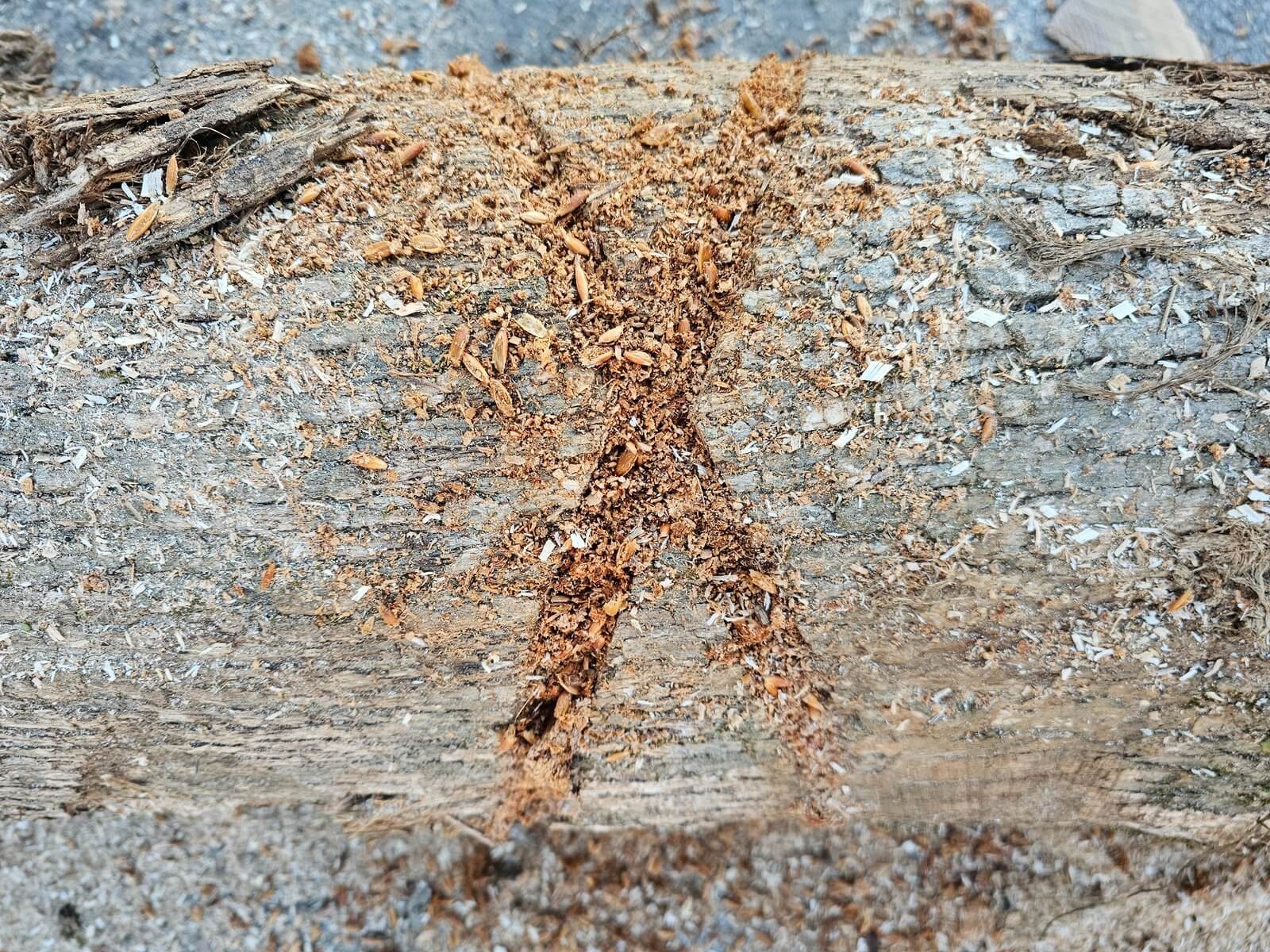
Plug spawn has its place, but sawdust spawn unlocks the real potential of log systems.
With sawdust spawn, you get:
A single deep wedge cut packed with sawdust spawn can outperform an entire log drilled full of plugs.
Less work. Better biology. Better results.
At its simplest, log cultivation requires:
No pressure cookers.
No clean rooms.
No climate-controlled buildings.
And when you think systemically, it gets even better.
Log systems pair naturally with low-energy, resilient tools:
With a little planning, the system starts feeding itself.
Wood becomes mushrooms.
Mushrooms create more spawn.
Spawn creates more logs.
Yes—if you stop measuring success by speed alone.
Log cultivation works best as a long-term backbone system:
Logs don’t care about fuel prices.
They don’t rely on global supply chains.
They quietly produce year after year.
Many sustainable farms use logs not as their only system, but as their most reliable one.
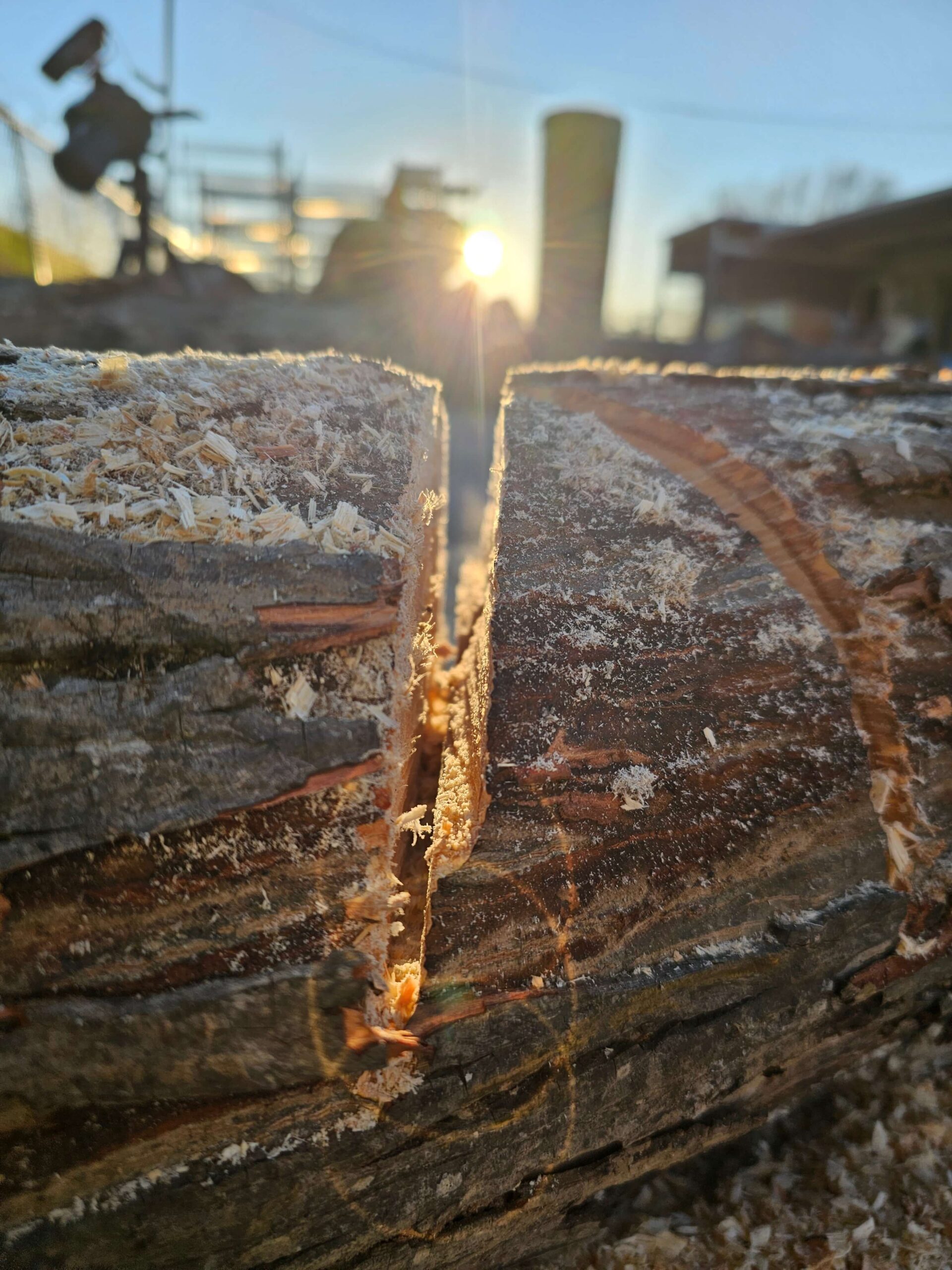
One of log cultivation’s greatest strengths is how unremarkable it looks.
To most people, it’s just neatly stacked firewood.
But it’s food.
It’s nutrition.
It’s future production stored in wood.
No stockpiles.
No panic.
Just biology doing what it’s always done.
Log cultivation isn’t flashy. It doesn’t chase trends or promise instant returns.
What it offers instead is time—time for systems to stabilize, for skills to mature, and for food to appear when it’s needed.
If you’re building a homestead, a sustainable farm, or a resilient food strategy, log cultivation deserves a place in the plan—not as a backup, but as a foundation.
Quiet systems last the longest.
#KeepSpawningCulture